Commercial Flat Roofing Services
Flat Roofs That Handle Pooling Water
Commercial Flat Roofing Services in Ham Lake for buildings experiencing drainage failures or membrane deterioration
Flat roofing systems fail when water pools in low spots, when seams separate during temperature swings, or when UV exposure degrades membrane surfaces over years of direct sun. M.D. Heiderscheid Construction Inc installs and repairs TPO, EPDM, and PVC roofing systems in Ham Lake, addressing the unique challenges of low-slope commercial roofs where gravity drainage is minimal and water migration can compromise interior spaces. You need this service when ceiling tiles show staining, when visible ponding lasts more than 48 hours after rain, or when previous patch repairs no longer hold during heavy storms.
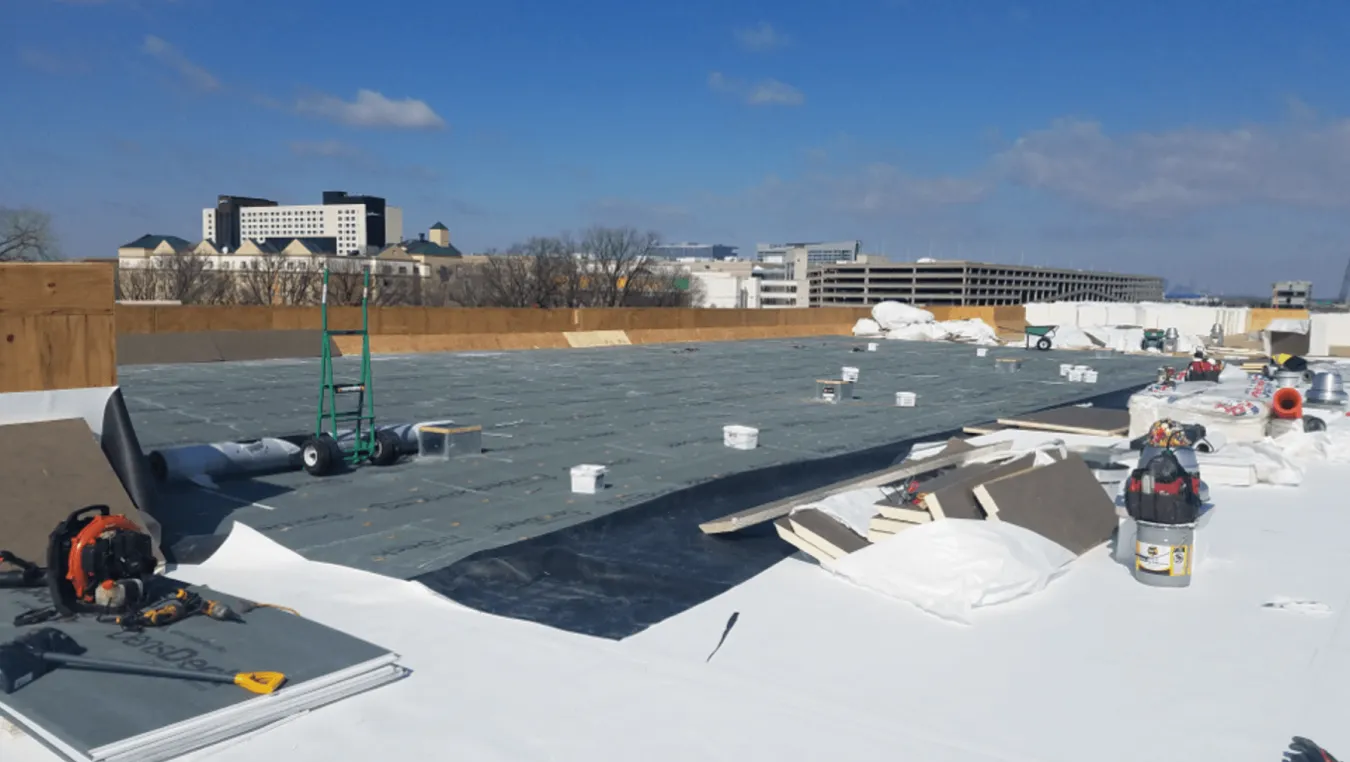
Installation involves preparing the roof deck, installing insulation layers that meet energy code requirements, and heat-welding or adhering membrane sheets in continuous sections that eliminate mechanical fasteners in the waterproof layer. TPO roofing systems reflect sunlight and reduce cooling costs, EPDM rubber roofing offers flexibility in freeze-thaw conditions, and PVC systems resist chemical exposure from industrial exhaust or rooftop equipment. Proper drainage solutions include tapered insulation systems that redirect water toward scuppers and drains, preventing the ponding that accelerates membrane breakdown.
Request a roof inspection to identify drainage issues and membrane condition.
Explore Our Roofing Services

Need a Roof Assessment Fast?
Book your inspection today and get a 48-hour bid turnaround on your roofing estimate.
How Flat Roofing Systems Address Drainage
Flat roofs are not truly flat—they require a minimum slope of one-quarter inch per foot to move water off the surface. When original construction lacks adequate slope, tapered insulation systems create pathways that direct water toward roof drains and prevent the standing water that leads to membrane failure. Leak detection on flat roofs involves tracing water entry points that may be far from where interior damage appears, since water travels along seams and under membrane layers before finding a path through the roof deck.
After installation or repair, water no longer collects in visible pools, seams remain sealed during temperature fluctuations, and interior ceilings stay dry even during prolonged rainfall or rapid snowmelt. The membrane surface remains intact without cracks, blistering, or separations at termination points where the roofing meets walls or equipment curbs. Buildings with properly functioning flat roofs show no signs of moisture infiltration, and HVAC efficiency improves when reflective membranes reduce heat gain during summer months.
Maintenance programs extend flat roof lifespan by addressing minor issues before they expand into full membrane failures. Regular inspections identify problems like clogged drains, loose flashings, or small punctures from foot traffic or debris. Preventative repairs cost significantly less than emergency interventions that require large-scale membrane replacement or interior restoration after water damage occurs.
Common Questions About This Service
Property managers evaluate flat roofing options based on building use, budget, and maintenance capacity, and several practical questions guide those decisions.
What causes flat roofs to leak?
Leaks typically develop at seams where membrane sections join, around penetrations like vents or HVAC units, or in areas where ponding water gradually breaks down the roofing material through constant exposure and UV degradation.
How long do flat roofing systems last?
TPO and PVC systems generally perform for 15 to 25 years, while EPDM rubber roofing can last 20 to 30 years, depending on installation quality, maintenance frequency, and exposure to harsh weather conditions common in Ham Lake.
Why does water pool on flat roofs?
Ponding occurs when the roof lacks adequate slope, when insulation compresses over time and creates low spots, or when drains become blocked and prevent water from exiting the roof surface as designed.
What is the best flat roofing material?
The choice depends on building requirements—TPO offers energy efficiency and cost-effectiveness, EPDM provides flexibility in cold climates, and PVC resists chemicals and withstands high foot traffic from maintenance personnel.
How often should flat roofs be inspected?
Inspections twice per year, typically in spring and fall, allow early detection of membrane damage, drainage problems, or flashing failures before they result in interior leaks or structural damage.
M.D. Heidersheid Construction Inc provides flat roofing installation, repair, and maintenance tailored to the operational needs of commercial properties in Ham Lake. Contact our office at (763) 862-0616 to schedule a roof evaluation and review system options.